STG環境
skip to main contents.

GAIA Governed AI Access AI Access Platform — GAIA

gaia_en_kv__sp_OL
GAIA Governed AI Access

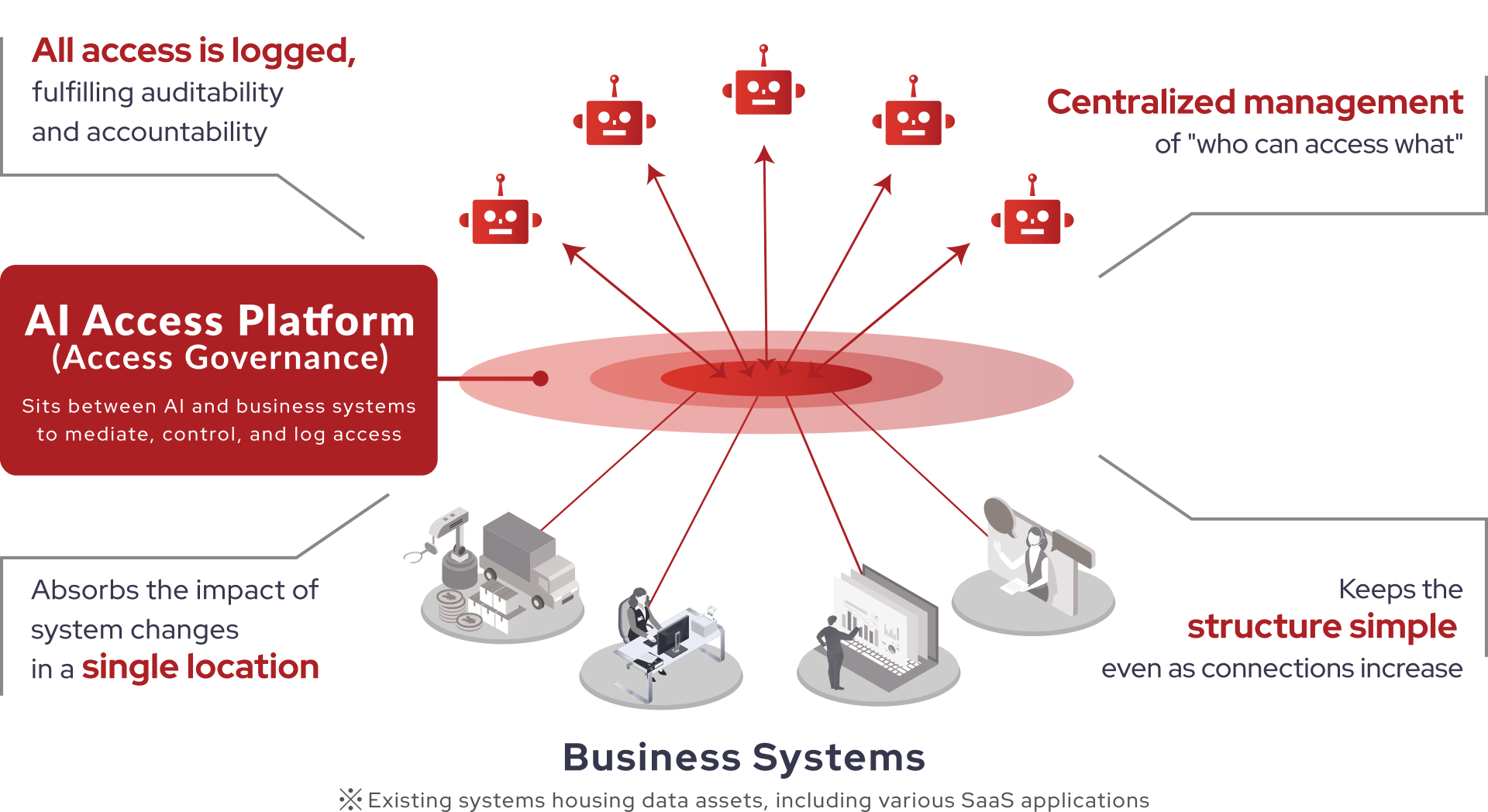
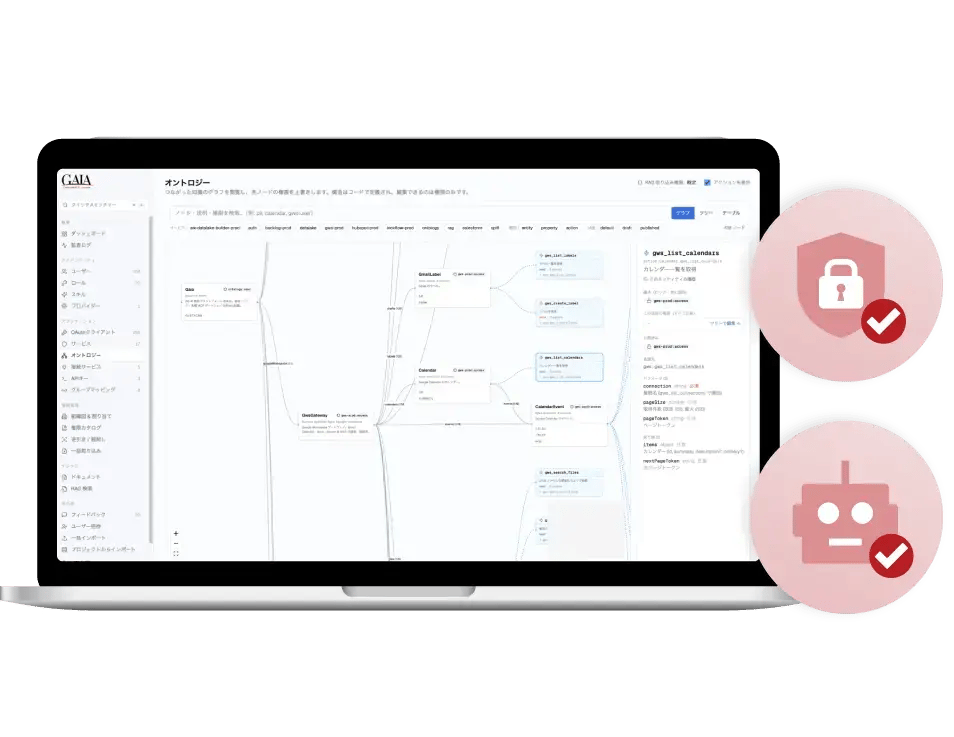
GAIA Governed AI Access (GAIA) is a platform that controls, logs, and manages the data access AI agents perform.

With secure data access through permission pass-through and automatic logging of every access, GAIA supports enterprises in bringing AI into production. 

Without sacrificing the speed
and safety of AI adoption,
deliver the answers management needs.

gaiaGiving AI secure access to management information
without exceeding the individual user's own permissions

gaiaNo business data migration required for adoption
gaia__mockup02-1

gaia_en_diagram07_OL

What Is GAIA?
 

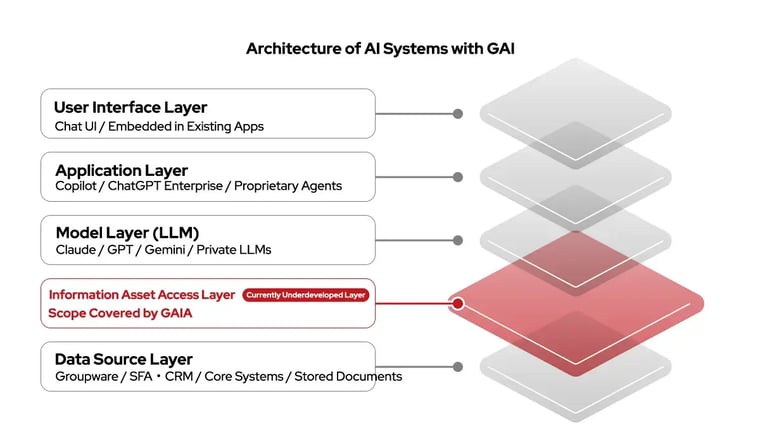
GAIA is the information-asset access platform for putting AI to work.
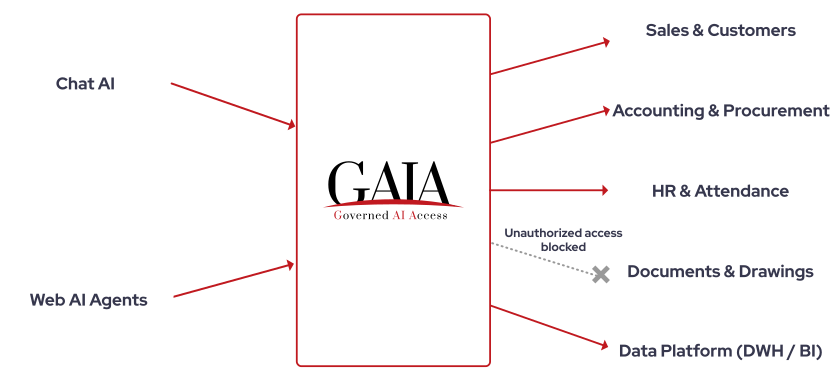
Through GAIA, AI gains secure access to all of your company's internal data.

Why GAIA Matters
 

AI answers what management actually

wants to know

When AI gives only generic answers, it isn't a matter of AI performance.

It's because AI can't reach your internal information. GAIA is the platform that delivers AI to core systems, SaaS tools, drawings, and documents — within each user's own permissions.

gaia_en_diagram01_OL

What GAIA Makes Possible

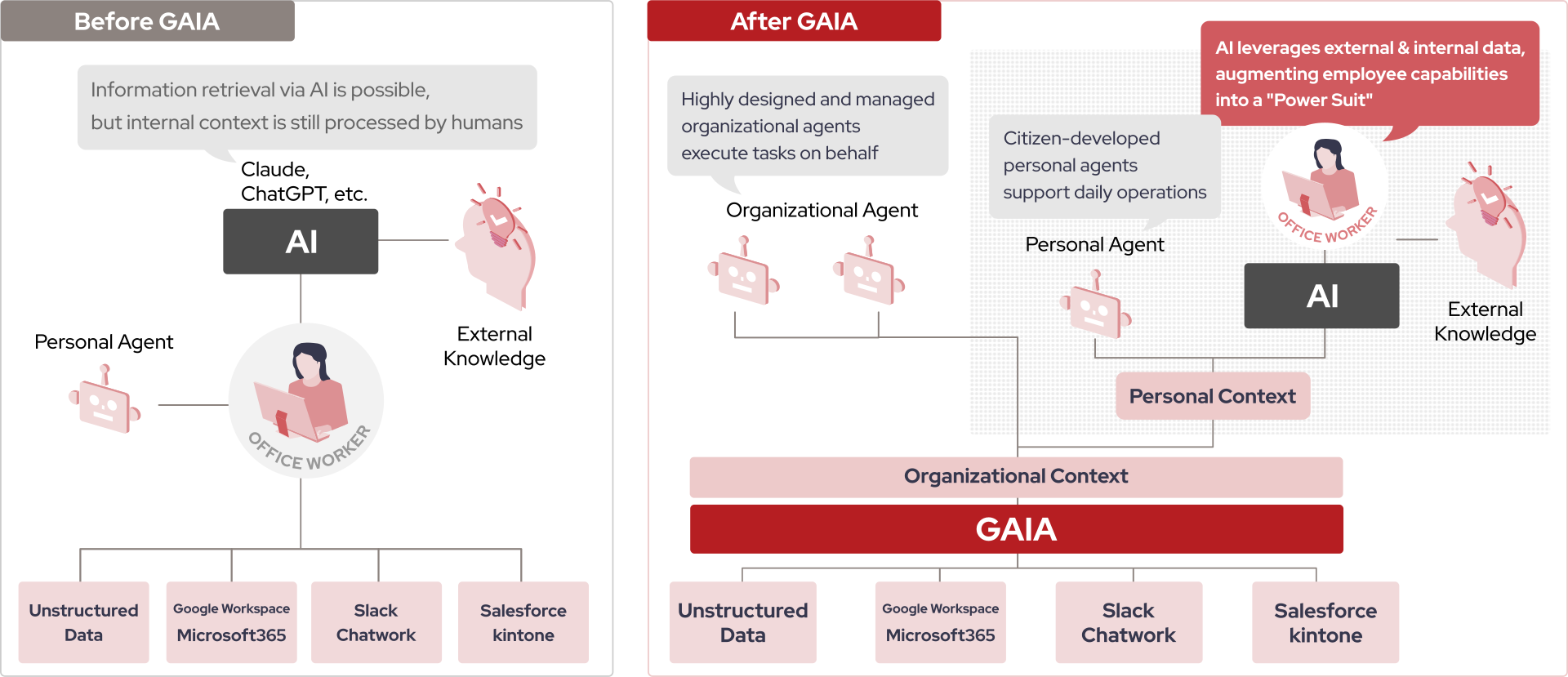
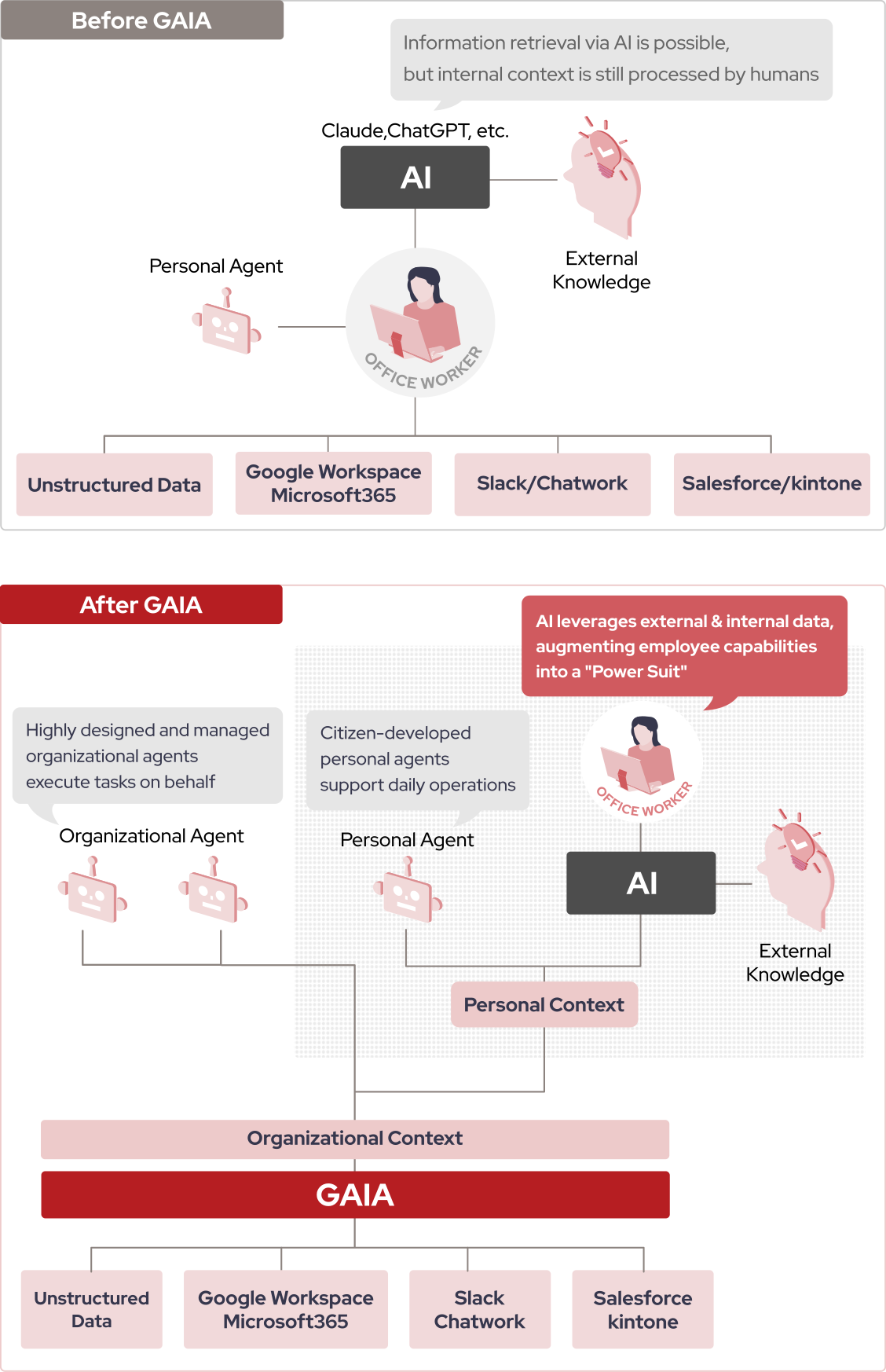
AI cross-references external information with internal information.

When outside expertise — in product development, global expansion, business schemes, and more — combines with internal knowledge, it dramatically expands what your people and organization can deliver.

gaia_en_diagram02_OL
gaia_en_diagram02__sp_OL

How GAIA Changes Management

gaia_en_diagram03_OL
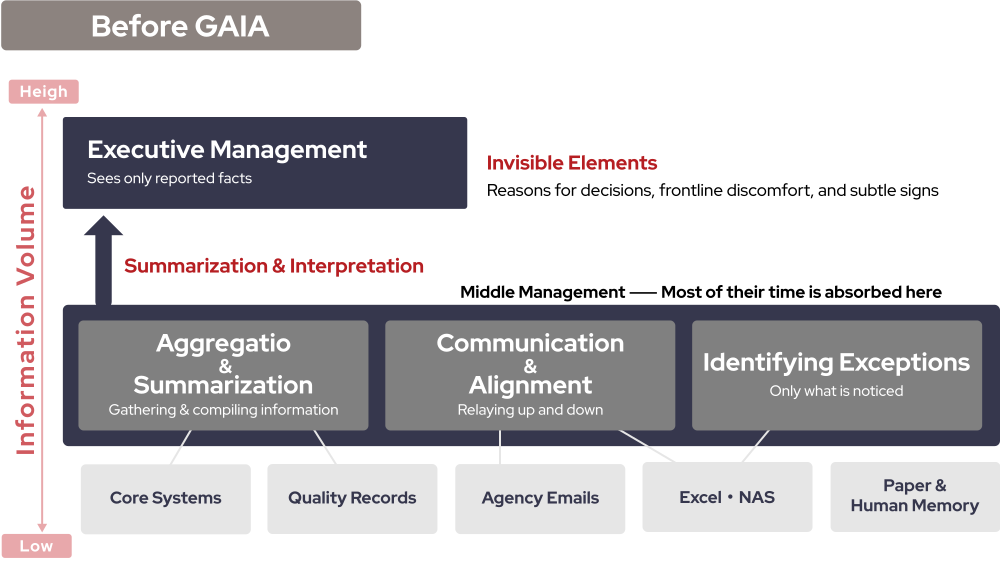
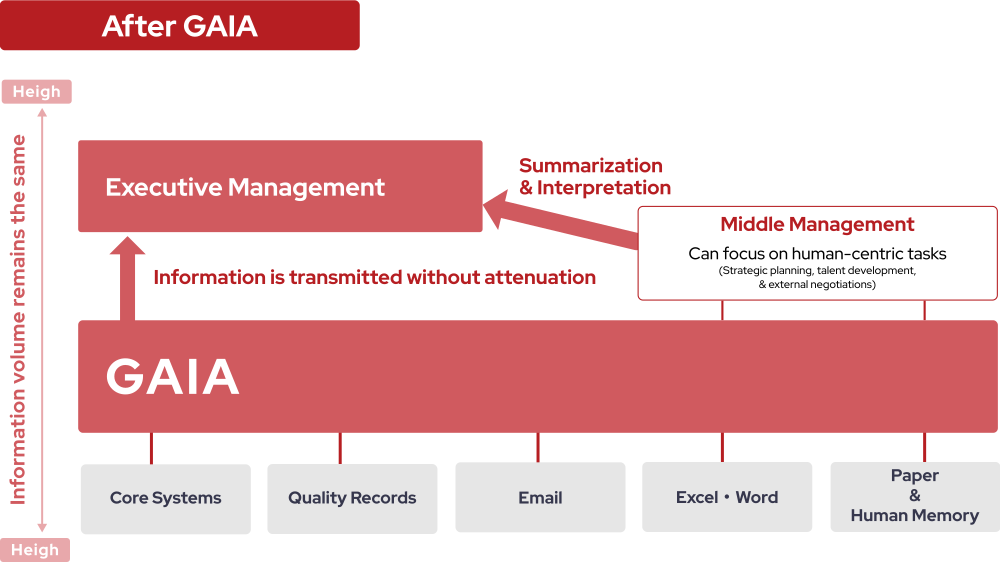
Middle management gathers, summarizes, and processes information from each source before passing it up and down the chain. In that process, information inevitably degrades — without any ill intent — through loss or distortion. This is the perennial management problem of losing touch with what's really happening on the ground.
gaia_en_diagram04_OL
What management sees shifts from “reports filtered through middle management” to “information straight from the organization itself.”

The biggest change is
noticing shifts

in the situation sooner.


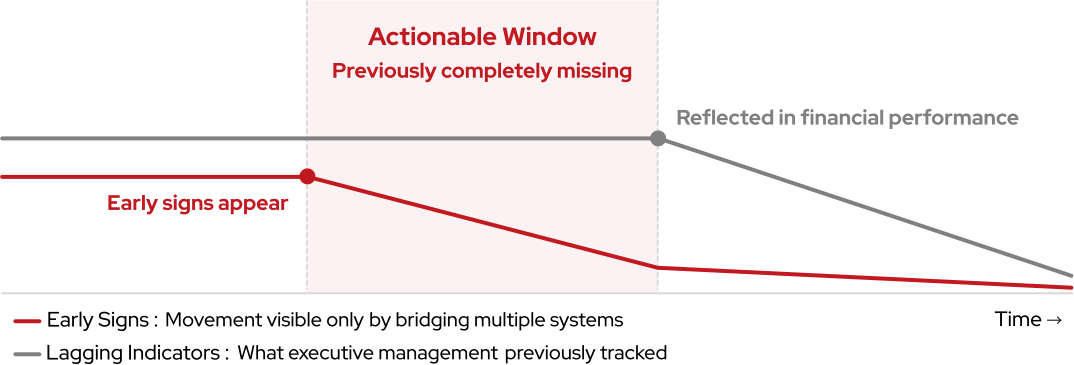
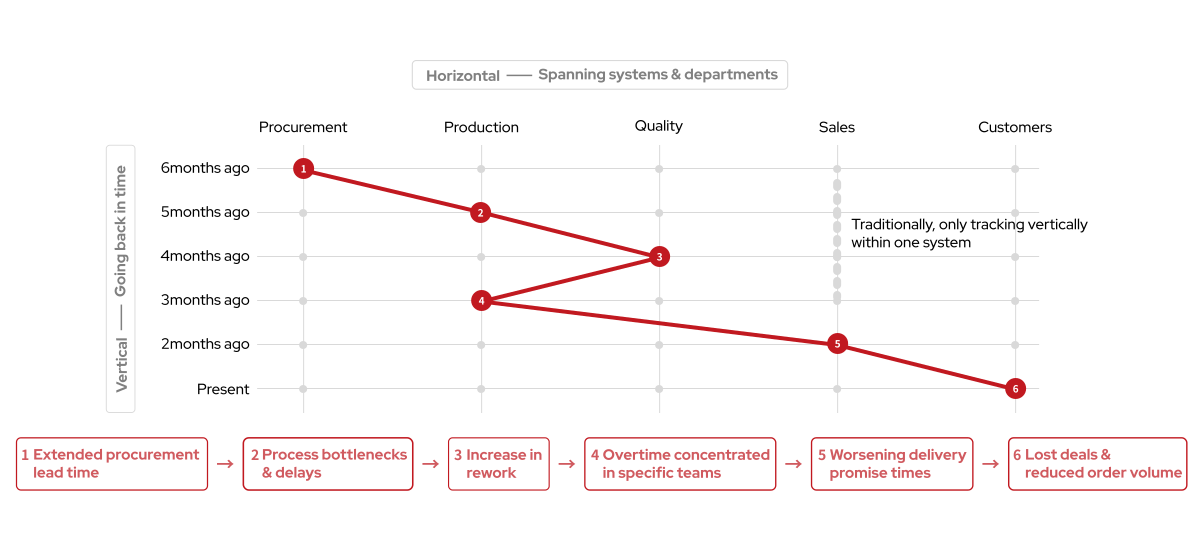
By the time management notices an anomaly in the numbers,
the cause already happened months earlier.


Looking across siloed systems along a timeline surfaces the signs that appear before the results do. What GAIA changes is exactly this — the moment you notice.

gaia_en-diagram06_OL

Not just gathering data

to look at — noticing it,

and acting.

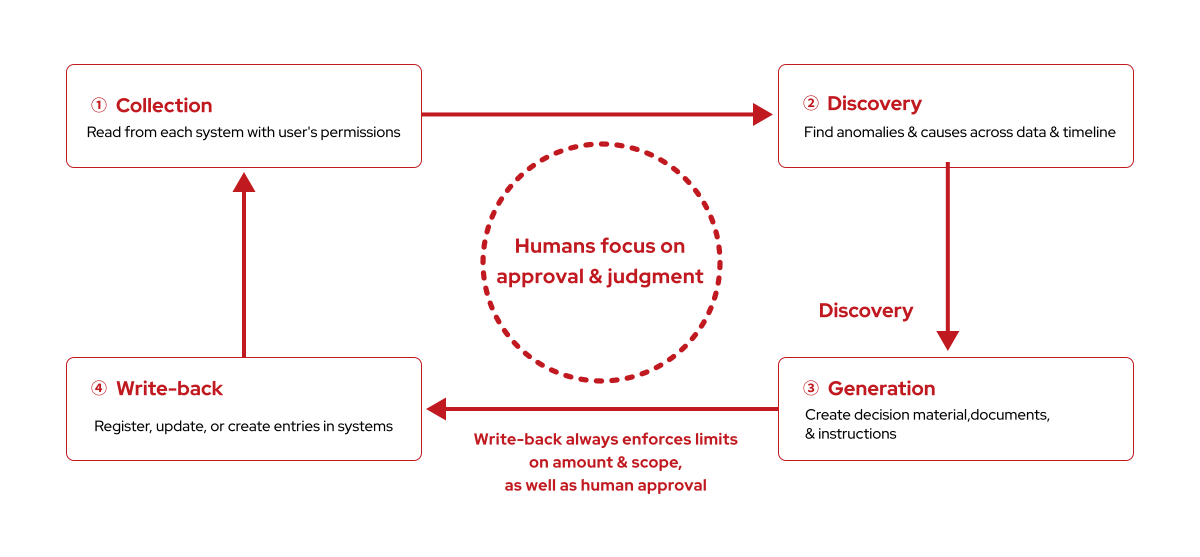
01-Sense changes happening across the company, like a nervous system,

02-trace the cause-and-effect chains that run both vertically and horizontally,

03-and feed what it finds back into the system.

—— GAIA handles all three in a single flow.

01


Awareness spreads across

the whole company


—— What's happening inside the company —

you become able to sense it.


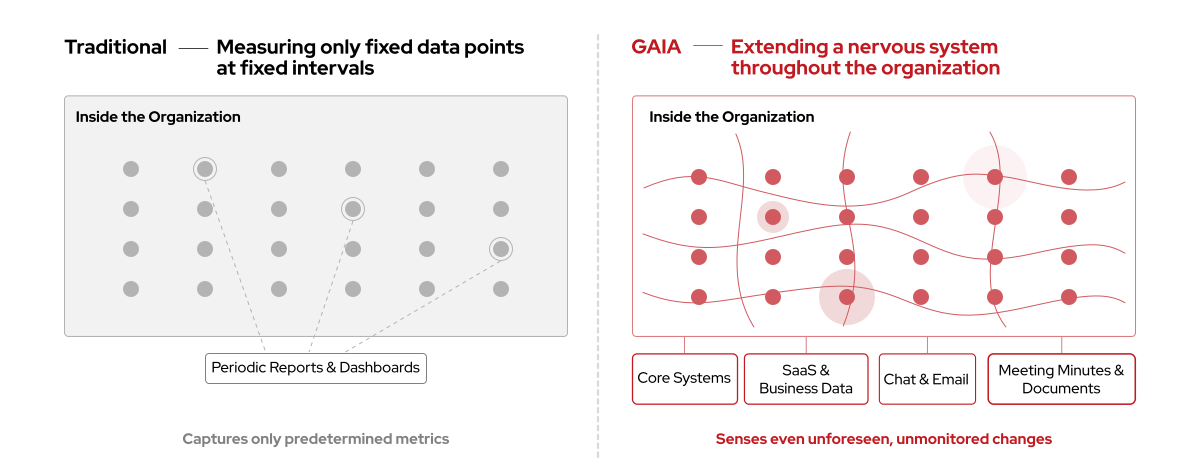
A dashboard shows predetermined metrics on a predetermined cycle. Whatever wasn't defined in advance never shows up there. By connecting GAIA to core systems as well as communications such as chat, email, and meeting minutes, you become able to notice changes that were never designed into a metric in the first place.

gaia_en_kiduki

Including the exchanges and document-level changes that never turn into numbers,

the company becomes able to sense what's happening within itself.


02


Look across, and look back


—— Something no single metric will ever reveal 


What's happening on the ground can never be explained by a single cause. Only by tracing both horizontally (across departments and systems) and vertically (back through time) does the chain of cause and effect come into view.

gaia_en_matagu

03


Not just reading — writing back 


—— Don't stop at analysis — feed it back into the system


Most analysis ends at a mere “insight,” leaving everything after that to manual work. Agents running on GAIA go further — not just reading, but writing the results back into the system after approval.

gaia_en_modosu

Using AI while still meeting

your accountability obligations

ソリューション概要

タイトル
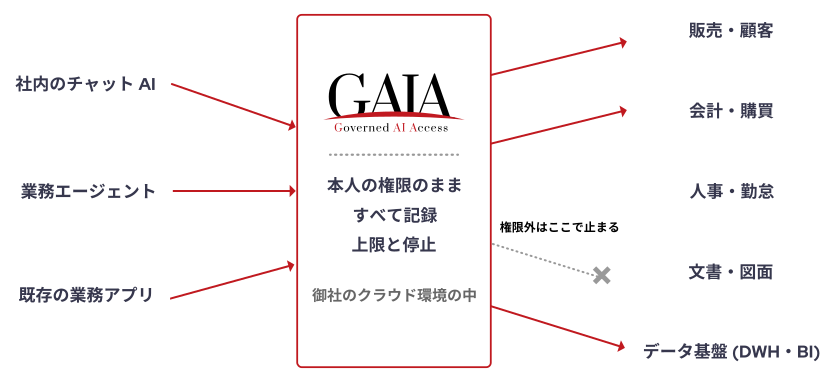
The reason AI adoption doesn't feel effective is that AI can't answer with your internal information in mind.
GAIA stands as the single checkpoint between AI and your internal systems, creating an environment where AI can finally answer with that context.
By introducing GAIA, you no longer need to build a custom connection for every AI, and you can consolidate governance into one place.
gaia_en_diagram05 _OL

Questions AI Can Now Answer

Executive & Company-wide

aq-gaia-icon-01

Are next term's orders
really on track right now?

Are next term's orders
really on track right now?


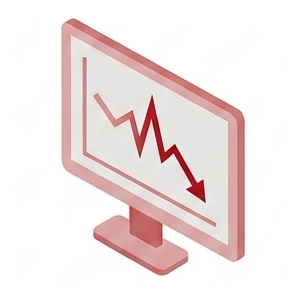
Now: Judged by monthly results and sales gut feel. You only learn revenue has dropped after it has.


With GAIA: Signs appear months before revenue drops, drawn from deal momentum, contact frequency, and stalled quotes.
aq-gaia-icon-02

Which anomaly should
management watch this week?

Which anomaly should
management watch this week?


Now: Waiting on each department's report, then days to reconcile them.


With GAIA: Company-wide status rolls up onto a single page every morning, with only the anomalies surfaced.
aq-gaia-icon-03

Where in the company is the
precedent for this decision?

Where in the company is the
precedent for this decision?


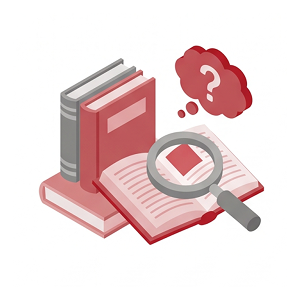
Now: Stops at “I think there was a similar case three years ago.”


With GAIA: Searches across past approvals, minutes, and records, and surfaces the answer instantly — with its source.
aq-gaia-icon-04

If that person left,
what would stop?

If that person left,
what would stop?


Now: No one has taken stock. You find out only after they're gone.


With GAIA: Decision-making patterns accumulate on the company's side, so you can see the impact of a handover before it happens.

Projects & the Field
aq-gaia-icon-05

Which projects are
heading into the red?

Which projects are
heading into the red?


Now: Discovered only when monthly costs come in — by then it's too late to act.


With GAIA: Candidate countermeasures surface before profitability collapses, drawn from changes in hours worked, progress, and communications.
aq-gaia-icon-06

Will this deadline
really be met?

Will this deadline
really be met?


Now: Based on self-reporting from the field. Delays surface only at the last minute.


With GAIA: Crosses orders, procurement, processes, and shipping to flag high-risk items ahead of time.
aq-gaia-icon-07

Has this same defect
happened before?

Has this same defect
happened before?


Now: Records exist, but can't be found. Every time means starting the investigation from zero.


With GAIA: Searches past defect records and corrective-action reports to surface similar cases and their fixes.
aq-gaia-icon-08

Why isn't
this inventory moving?

Why isn't
this inventory moving?


Now: The explanation stops at “demand must have dropped.”


With GAIA: Re-checks that conventional diagnosis across sales, purchasing, pricing, and customer trends.

People & Organization

aq-gaia-icon-09

Can you spot flight risk before someone actually leaves?

Can you spot flight risk before someone actually leaves?


Now: You find out only when someone hands in their resignation.


With GAIA: Crosses changes in assignment, workload, evaluations, and attendance to catch early warning signs of attrition (built on anonymization).

aq-gaia-icon-10

How do you run a function you can't dedicate a specialist to?

How do you run a function you can't dedicate a specialist to?


Now: The president and a handful of executives cover it on top of their other roles — and it becomes the bottleneck on growth.


With GAIA: AI that knows your internal information connects it with outside knowledge, raising the quality of every decision.

How AsiaQuest Uses GAIA Internally

We actually run these on the GAIA platform ourselves and use them in our own daily operations.

Live Project Health Monitoring

Detects early warning signs across all projects and flags candidates before profitability breaks down

Live Sales Agent

Cross-references customer activity with deal information to proactively surface proposal cards

Live Management Analytics

Triangulates industry trends, technology trends, and internal data to build the material for management decisions

Live Operations Support Chat

A day-to-day inquiry desk that reaches internal information within each user's own permissions

GAIA

We offer a range of plans tailored to your company's size and scope of use. Please contact us for details.


  •  

¥6,000,000~

GAIA Pricing Plans

Plans & Pricing

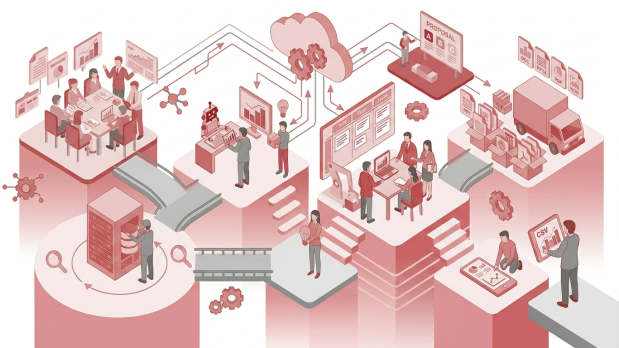
We offer a range of plans tailored to your company's size and scope of use.
Please contact us for details.
Annual fee ¥6,000,000 ~
GAIA pricing plan illustration

FAQ Frequently Asked Questions

Should we introduce GAIA or a data platform (data warehouse) first?

There's no need to compare them — they operate at different layers. A data platform is where you gather, organize, and view data; GAIA is the pathway that works on top of it to notice things across systems and feed them back into operations. If you already have a data platform, it simply becomes one of GAIA's connection points; if you don't, you can start without waiting for that integration.

How is GAIA different from BI tools or dashboards?

There are three differences. ① You don't have to go look — the change comes to you from wherever it occurred. ② You can trace cause-and-effect chains across departments and time. ③ You can write the findings back into the system after approval. In particular, ③ is something a BI tool cannot do by design.

We already use AI tools. Do we need to replace them?

No. GAIA doesn't replace your existing AI tools — it's the layer underneath that handles access to information and logging. The tools you already use simply gain safe access to your internal information.

Our data isn't fully organized yet. Do we need to finish that first?

No. GAIA doesn't move your data — it connects to it right where it already lives. You can move forward with data organization and AI use in parallel.

We're concerned about AI updating our systems on its own.

Writing back to core systems always goes through amount and scope limits and an approval step. Your company decides what can be written back, field by field, and anything beyond that is blocked. Every action is logged.

We're planning to replace our core system in a few years.

That's not a problem. Only GAIA's connection to that system needs to change — the agents running on top of it, and how your team uses them, stay the same. Absorbing the impact of system changes in one place is one of the reasons this layer exists.

Which AI model will we end up using?

You choose. GAIA isn't locked to a specific model. Whichever way the competition among LLMs plays out, you can switch models on the same underlying platform.

Where should we start?

Start by naming one question that no one inside your company can answer immediately right now. We'll check whether the necessary data can be retrieved for that theme, and design it as the subject of a proof of concept.