skip to main contents.

AI Skill Transfer: Standardizing Care & Cutting Educator Burden

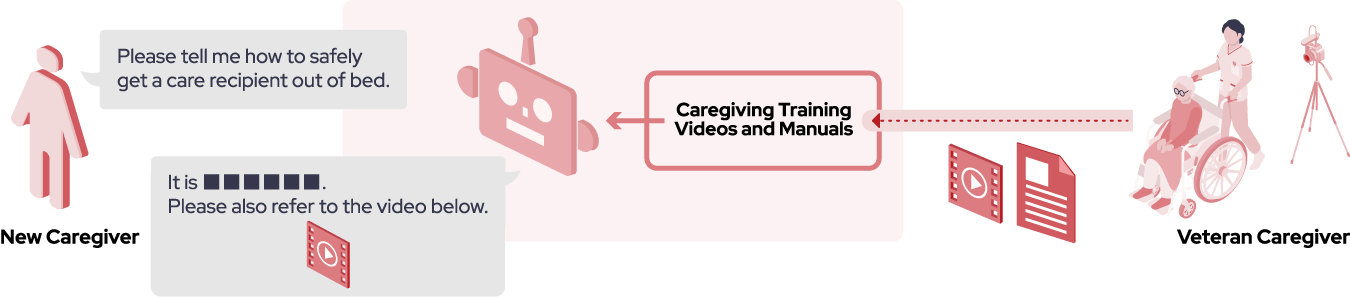
AI learns and inherits expert implicit knowledge and techniques
Dynamically presents training videos and manuals based on query content
Reduces the burden on educators and standardizes caregiving techniques

For Various Industries Industry-Specific Use Cases

01. Nursing & Healthcare Industry (OJT Support / Skill Standardization)

Use Cases
Immediate, dialogue-based guidance on emergency responses and complex assistance techniques on site.
Extraction and provision of expert implicit knowledge (subtle tips, precautions) from videos and manuals.
Periodic skill checks and support for skill improvement based on standardized procedures.
Benefits
Accelerated integration of new caregivers into the workforce and shorter OJT periods.
Stabilized quality of care services and improved safety for users.
Relief of veteran staff from education and instruction duties.

02.Manufacturing Industry (Skill Transfer / Technical Training)

Use Cases
Searching and presenting work procedures from video manuals recorded by skilled workers.
Dialogue-based simulation of equipment failure diagnosis and specific abnormality response procedures.
Learning the techniques and judgment criteria of veteran employees to provide optimal work advice to novices.
Benefits
Faster proficiency in complex manufacturing processes.
Elimination of reliance on individual expertise in skill transfer and stabilization of quality.
Maintenance and improvement of site productivity and reduction of technical training costs.

03.Construction Industry (Safety Education / Know-how Sharing)

Use Cases
Dialogue-based provision of necessary procedures and past near-miss examples for Hazard Prediction Activities.
Immediate provision of specialized knowledge on specific construction methods or special materials in response to questions.
Guidance on quality control checklist items and required measurement methods, along with videos.
Benefits
Increased safety awareness on site and reduction of accident risks.
Promotion of know-how sharing in the field where knowledge tends to be dispersed.
Reduction of training time for site supervisors and newly assigned engineers.