Municipal & Disaster Prevention
DX Solutions
自治体・防災DXソリューション

Advancing the realization of a digital society
in municipal and disaster-prevention DX
By leveraging diverse digital technologies and system infrastructure such as IoT and AI,
we enhance the convenience of citizens’ daily lives while
enabling rapid information gathering and real-time alerts in the event of a disaster.
We provide comprehensive solutions that support both an enriched everyday life and safety and security in emergencies.
AsiaQuest’s Municipal & Disaster Prevention DX Solutions
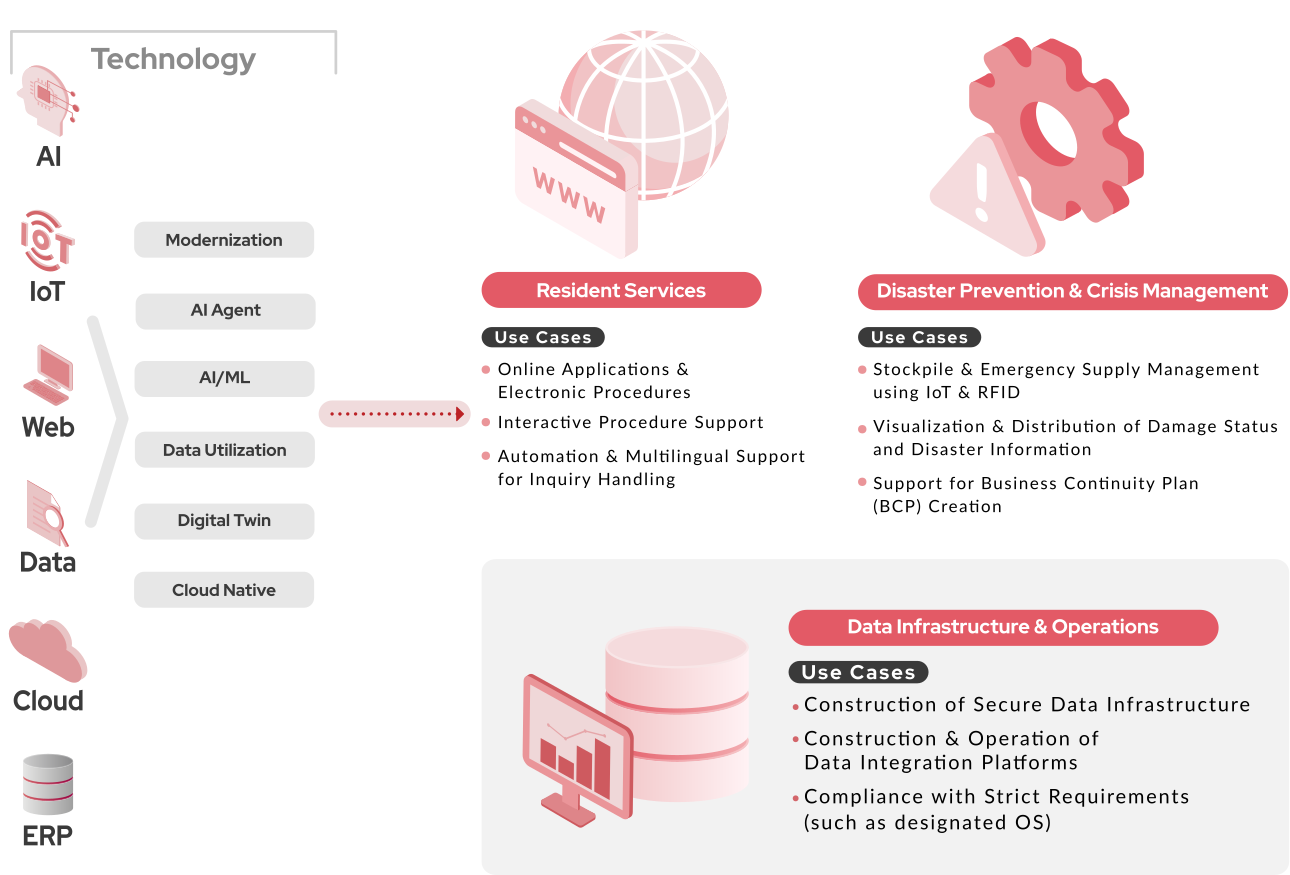
AsiaQuest supports DX in the municipal and public sectors, achieving both greater convenience in resident services and stronger disaster-prevention and crisis-management systems. Using generative AI, IoT, and the cloud, we support the realization of dependable administrative services in both normal and emergency situations—from streamlining the handling of residents’ applications and inquiries, to visualizing stockpiled supplies, to developing data-integration platforms for times of disaster.
Example
Services
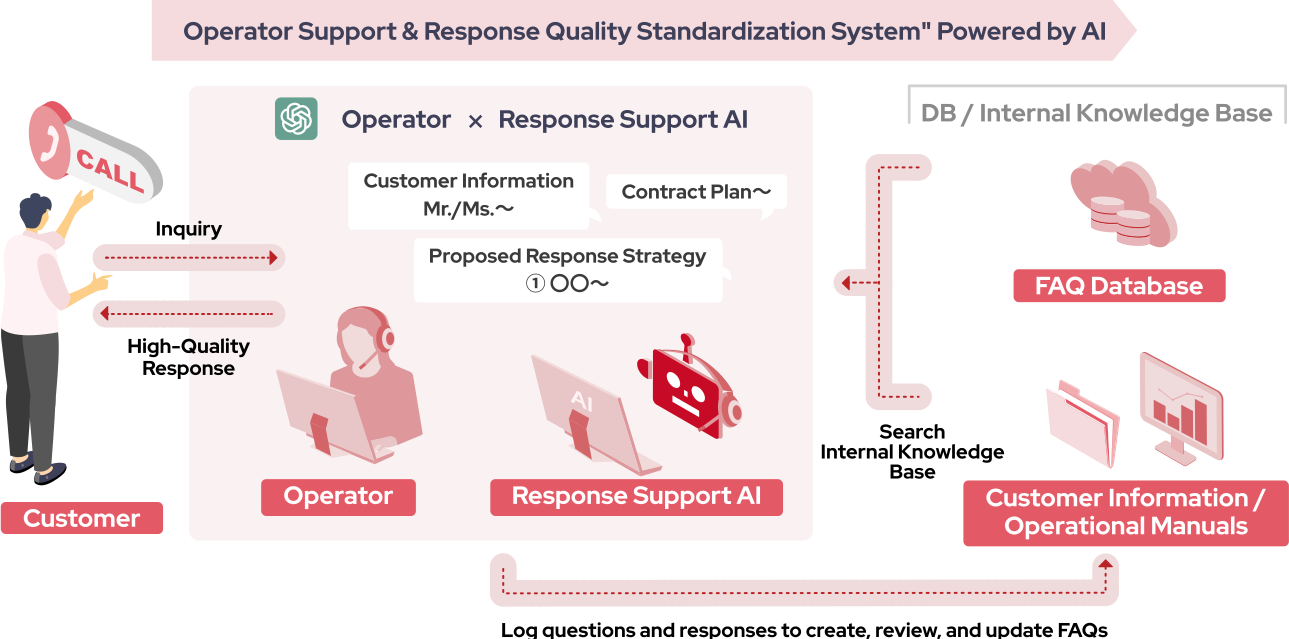
- Operator Support & Response Quality Standardization System
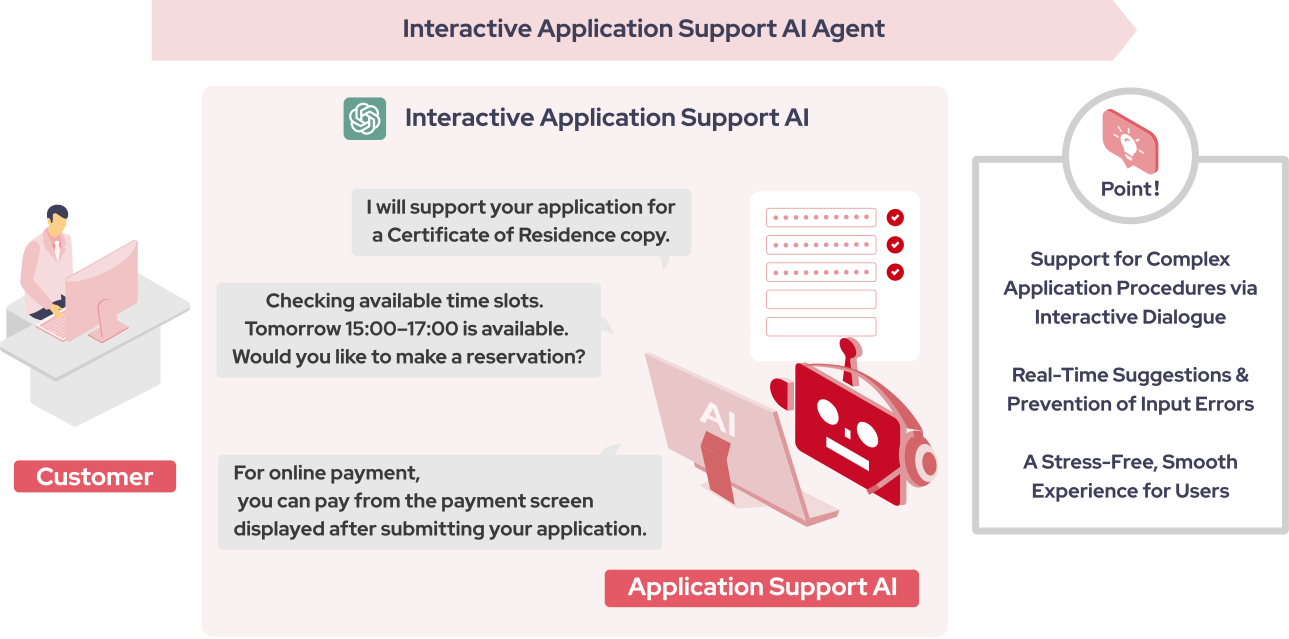
- Conversational Application Support AI Agent
- Digitalization of Citizen & Government Services
- Utilization of Open Data
- Promotion of Regional Revitalization
- Disaster-Prevention Systems Using IoT/3D Technology
- Building a Disaster-Prevention Digital Platform
- Platform-Data Application Development
Operator Support &
Response Quality Standardization System
AI learns from response histories to continuously raise response quality.
AI analyzes customer conversations in real time and automatically presents operators with optimal answer suggestions and FAQs. The AI automatically updates the FAQ based on daily interaction records, continuously standardizing response quality. This allows even new staff to respond as quickly and effectively as veterans, eliminating dependence on individual skill, shortening response times, and improving customer satisfaction.
- AI automatically presents operators with optimal answer suggestions and FAQs
- Automatically updates FAQs from response history, continuously standardizing response quality
Example
Challenges
- Inquiries outside office hours cannot be handled, putting pressure on counter operations
- Want to automate information dissemination during disasters to streamline emergency communication
- Want to automate multilingual tourism and facility guidance to improve convenience
Conversational Application Support AI Agent
Conversations with AI remove the barriers to entering information for complex procedures.
This is an application support system in which AI guides users through missing information in a conversational format, adapting to each user's input status for complex procedures and contract processes. It lowers the barrier of difficult terms and conditions and input fields to prevent users from abandoning the process partway through, while AI's real-time error checking reduces the back office's workload for returns and confirmations.
- Navigates missing information through conversation, lowering input barriers and reducing drop-off
- Reduces back-office rework and confirmation effort through real-time error checking
Example
Challenges
- Want to support applications for resident certificates, tax certificates, facility reservations, and childcare support programs in a conversational format
- Want to streamline the issuance of disaster victim certificates during emergencies
Digitalization of Citizen & Government Services
Improving the productivity of government operations through document digitization and business process automation.
We advance the digitalization of operations and the introduction of information systems to make local government administration more efficient — for example, digitizing documents with AI-OCR and automating operations with RPA.
- RPA (automation tools)
- AI-OCR (form data entry)
- Chatbot (automated response service)
Example
Challenges
- Document handling and counter operations require significant manual labor, preventing progress on administrative efficiency

Utilization of Open Data
Publishing and linking municipal data for use in citizen services and disaster prevention.
We open up the various data held by local governments so that citizens and businesses can make use of it — for example, providing systems such as hazard maps that link map information with disaster-prevention data.
- IoT devices (device data collection)
- Cloud (city OS infrastructure)
- Data linkage platform (Providing API services)
Example
Challenges
- No mechanism exists for publishing and utilizing held data, so this data is not being translated into value for citizen services
Promotion of Regional Revitalization
Nurturing new businesses with digital technology to drive regional economic revitalization.
We foster new businesses and services that leverage digital technology to revitalize regional economies — for example, realizing smart cities and digitally leveraging local tourism resources.
- SmartCity (smart city development)
- Disaster-Prevention DX (disaster countermeasures)
- Regional Tourism DX (regional revitalization)
Example
Challenges
- Want to revitalize the regional economy, but effective measures and data utilization have not advanced

Disaster-Prevention Systems Using
IoT/3D Technology
Gathering information in real time with IoT and visualizing disaster risk in 3D
We provide disaster-prevention systems that enable information gathering and notification during disasters using the latest IoT technology. They collect data in real time, analyze accumulated data, and enable effective 3D visualization—supporting comprehensive disaster-prevention measures such as grasping disaster risk, evacuation support, and risk management.
- IoT sensors collect data in real time, accelerating situational awareness during disasters
- Visualizes accumulated data in 3D, used for grasping disaster risk and supporting evacuation
Example
Challenges
- Stockpile management Stockpile status at each site is not visualized, so decisions on replenishment and placement take time
- Outdoor monitoring Unable to grasp anomalies or signs of disaster in outdoor areas in real time, delaying the initial response
- Indoor monitoring Confirming safety and grasping evacuation status indoors takes time, preventing prompt support

Building a Disaster-Prevention
Digital Platform
Integrating and analyzing diverse data to support rapid situational awareness and response directives during disasters
To achieve information sharing and rapid response when a disaster occurs, we support appropriate directives and rescue operations through the integration and analysis of diverse data and real-time situational awareness. We build a platform that enables seamless communication among disaster-management agencies and stakeholders.
- Integrates and analyzes diverse data to achieve real-time situational awareness
- Supports seamless communication among disaster-management agencies and stakeholders
Example
Challenges
- Fragmented information Disaster information is scattered across departments and agencies, preventing unified situational awareness
- Lack of a data-utilization platform No platform to centrally manage and analyze accumulated data, so it cannot be used for rapid decision-making
- Delayed analysis and visualization Unable to leverage BI tools or AI analysis, so the speed of situational judgment and response directives does not improve

Platform-Data
Application Development
Leveraging platform data to optimize disaster-risk prediction and evacuation support
We provide web systems and smartphone application development that leverage platform data. By linking with the disaster-prevention platform to monitor, analyze, and issue notifications on data, we realize disaster-risk prediction, assessment of the extent of damage, and optimization of evacuation support.
- Predicts disaster risk through monitoring, analysis, and notification linked to the platform
- Develops applications that assess the extent of damage and optimize evacuation support
Example
Challenges
- Municipal initial response The actions to take when a disaster occurs (the timeline) are not organized, causing delays in the initial response
- Communication to citizens Lack of means to deliver disaster and evacuation information to citizens quickly and clearly
- Public-private data integration No mechanism to use data across the public and private sectors, making region-wide disaster-prevention measures difficult to advance
Case
Case

Beppu City
Digitalized emergency supply stockpile management using IoT/RFID, advancing municipal and disaster-prevention DX.
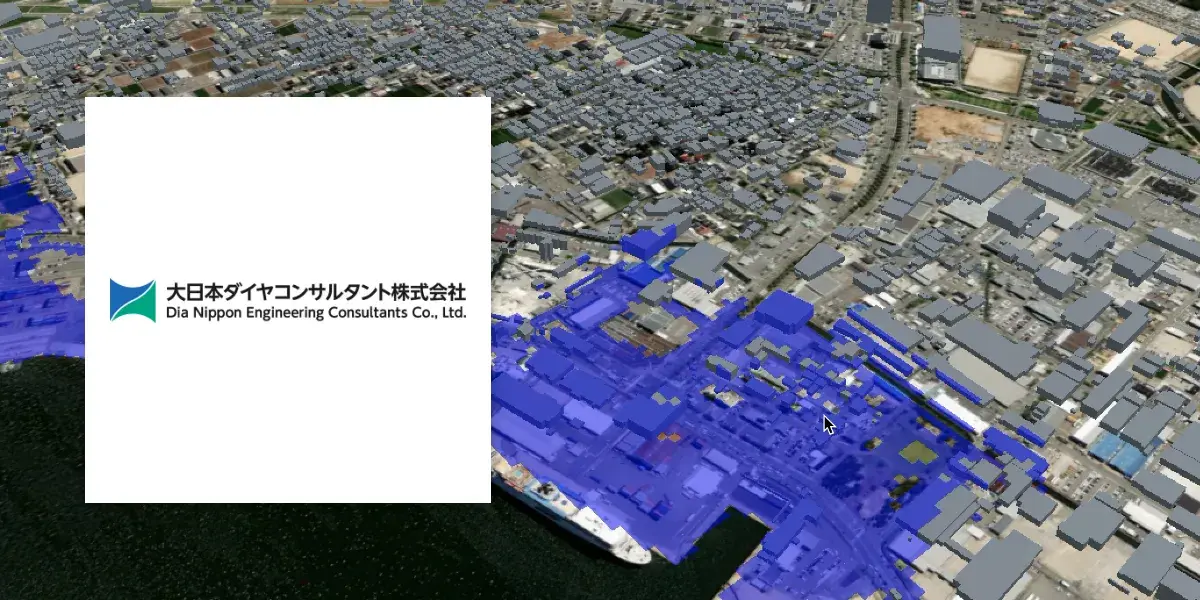
Dia Nippon Engineering Consultants Co., Ltd.
Comprehensive development support ranging from technical research to infrastructure construction and front-end development
Supported the PoC development of a Web3D platform that integrates regional data such as 3D city models and National Land Numerical Information with geographic information, enabling visualization of disaster risk simulations on 3D models.

NTT West Corporation
Support for building a generative AI chatbot PoC for IT help desk operations.
By leveraging our proprietary AI agent template "AQ-AI Agent," we delivered a PoC environment in a short period of about four months. We provided end-to-end support, from AWS environment setup and AI implementation to security measures and technical handover to the client.