skip to main contents.

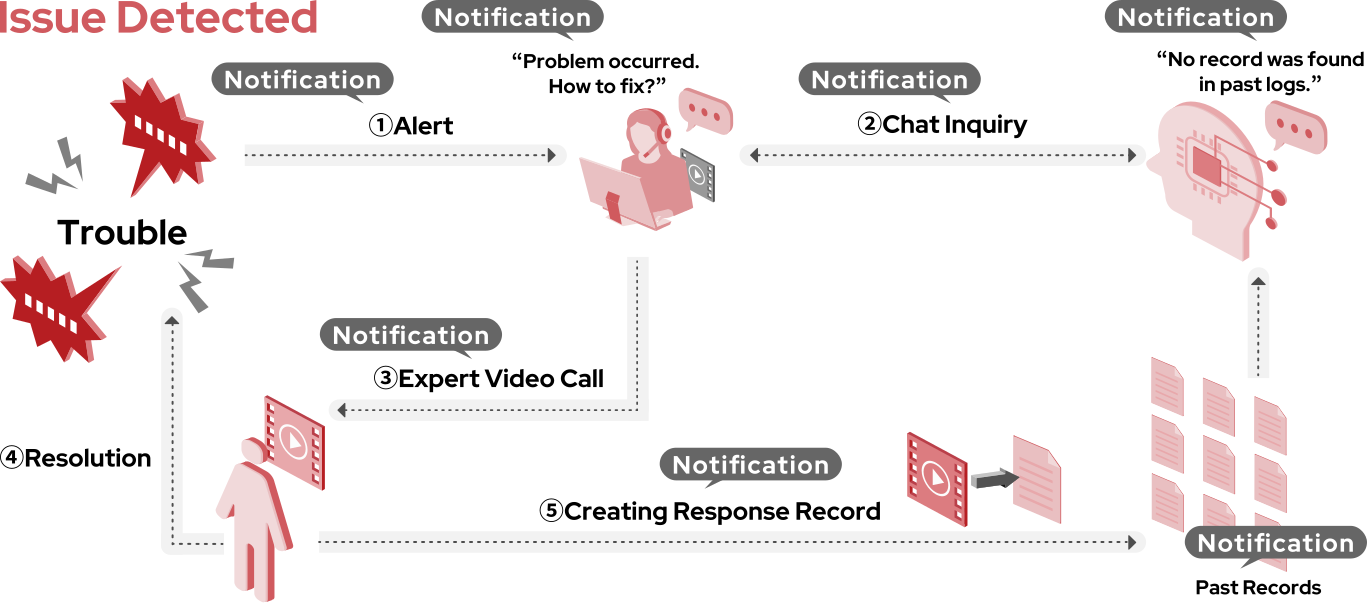
Accelerate problem-solving: standardize response quality by creating a database of expert know-how.

Troubles are handled by non-experts
RAG guides the actions to take when a trouble occurs
Only when the resolution method is unknown, communication is established with an expert, and the expert resolves the issue
By recording the resolution method after the issue is resolved, the know-how accumulates in the database

For Various Industries Industry-Specific Use Cases

01. Manufacturing (Technical Support & Maintenance Support)

Use Case
Automated initial response to sudden error codes in complex manufacturing equipment.
Digitalization of troubleshooting know-how from experienced technicians and immediate sharing with the work site.
Guidance on parts replacement procedures by RAG based on past repair records.
Effects
Minimization of downtime.
Improvement in the skills acquisition speed of junior and non-expert technicians.
Reduction of on-site visits by veteran technicians and workload mitigation.

02.Finance (System Operation & Customer Support)

Use Case
AI implementation in help desk operations for inquiries about minor errors or operation procedures of the core system.
Documentation of system failure recovery procedures by veteran operators, keeping manuals updated at all times.
Handling customer inquiries about complex financial product regulations with specialist intervention, adding the response history to the knowledge base.
Effects
Reduction in help desk staffing costs and standardization of response quality.
Shortening of recovery time during major system failures (MTTR reduction).
Strengthening compliance in customer support responses.

03.Information and Communication Technology Industry (IT Trouble Handling/Help Desk)

Use Cases
First-level triage and RAG-based guidance for handling IT infrastructure failures or service usage issues by non-specialized operators.
Escalation of only unresolved issues (where RAG cannot provide a solution) to expert engineers, with automatic recording of response logs and solutions into the Knowledge DB.
Analysis of customer complaints and inquiries to identify gaps in manuals and FAQs, followed by automatic AI-powered content supplementation.
Effects
Improvement in trouble resolution rates by non-specialized personnel (increase in One-Stop Resolution).
Maximization of labor productivity by allowing expert engineers to concentrate on high-level tasks.
Elimination of operational quality variations by consistently maintaining the freshness and comprehensiveness of the Knowledge DB.