skip to main contents.

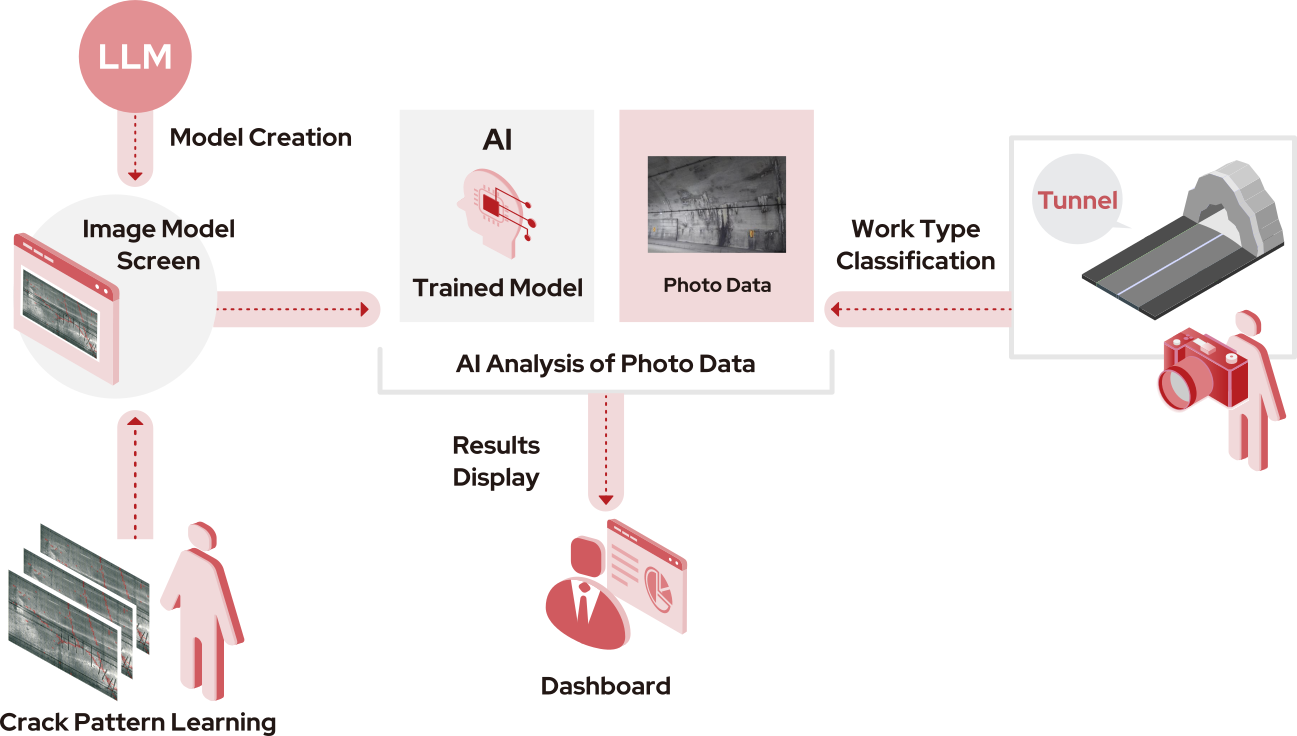
Rapid development with LLM and AI-driven automated analysis solution for infrastructure inspection and structural deterioration diagnosis

Rapid Construction of Inspection Models Using LLM
Automated Analysis of Damage and Deterioration Based on On-Site Photo Data
Centralized Management and Visualization of Analysis Results via Dashboard

For Various Industries Industry-Specific Use Cases

01. Construction & Civil Engineering (Structure Inspection & Deterioration Diagnosis)

Use Case
AI automatically detects and classifies cracks and delaminations in tunnels and bridges.
Quick processing of extensive infrastructure images captured by drones and cameras.
Link past inspection data with AI analysis results to predict the progression of deterioration.
Effects
Reduces missed detections and improves inspection quality compared to visual inspections.
Significantly shortens inspection time on site and improves work efficiency.
Enables planned repair work and optimizes maintenance costs.

02.Transportation Infrastructure (Railway Facility Maintenance & Safety Improvement)

Use Case
Automatically identifies minor damage to railway structures (viaducts, tracks).
Immediately shares inspection results via a dashboard to identify urgent areas.
Regular data collection allows for time-series monitoring of facility health.
Effects
Reduces inspection burden on inspectors and enables efficient inspections outside of normal operating hours.
Early detection of abnormalities reduces the risk of major accidents.
Supports data-driven decision-making necessary to maintain safety standards.

03.Manufacturing (Equipment Maintenance & Quality Control)

Use Case
Detection of cracks, rust, and other defects in operating production line equipment and piping from images.
Used in product appearance inspections to learn and determine patterns of minor defects and scratches.
Applies AI for remote inspection of equipment in hazardous or elevated locations, reducing labor costs.
Effects
Prevents unexpected equipment failures (downtime) in advance.
Achieves inspections with consistent quality standards without variability among inspectors.
Ensures safety of inspectors and establishes an inspection system not reliant on expert knowledge.